Buy deliver24.eu ?
We are moving the project
deliver24.eu .
Are you interested in purchasing the domain
deliver24.eu ?
domain@kv-gmbh.de · 0541-91531010
Buy deliver24.eu ?
What is the braking deceleration?
Braking deceleration refers to the rate at which a vehicle slows down when the brakes are applied. It is measured in meters per second squared (m/s^2) and represents the negative acceleration experienced by the vehicle as it comes to a stop. The braking deceleration depends on factors such as the vehicle's mass, the friction between the tires and the road, and the force applied to the brakes. A higher braking deceleration means the vehicle will come to a stop more quickly. **
How do I calculate the deceleration?
To calculate deceleration, you need to determine the change in velocity and the time it takes for that change to occur. Deceleration is calculated by dividing the change in velocity by the time taken for the change to happen. The formula for deceleration is: deceleration = (final velocity - initial velocity) / time. Make sure to use consistent units for velocity and time in your calculation. **


Similar search terms for Deceleration
Top-Angebote
Products related to Deceleration:
-
Thule Courier Pet Kit - Aegean BlueThule Courier Dog Trailer Kit provides a safe and comfortable ride for your dog. It makes your trailer even more versatile, making it easy for you and your four-legged friend to live an active life outdoors and discover exciting new places...159,95 $*Shipping: 0,00 $Secure redirect to the provider
-
Thule Courier Bicycle Trailer + Stroller - Aegean BlueKids, cargo, or canines; this versatile bike trailer is perfect for active families. Load up your family and gear for any destination with Thule Courier a safe and comfortable bike trailer for up to two kids.The large seat with padded harness and...599,95 $*Shipping: 0,00 $Secure redirect to the provider
-
Thule Courier Bicycle Trailer + Pet Kit Bundle - Aegean BlueWhy We Love It Convertible bike trailer/strollercarries kids, cargo or dogs; Adjustablehandlebarensuresaperfect fit for any parent; 100 lb total weight capacity,suitable up to 2 children; Safespacious seats withlarge easy-access rear storage; Folds...679,92 $*Shipping: 0,00 $Secure redirect to the provider
-
Express One 77HD4-313 HDMI Cable High Speed with Ethernet V2.0 Full HD 4K 3D, Black/Gold, 3 m3 metre high-speed HDMI cable with Ethernet, male to male, with gold-plated connectors and a black jacket. Supports Full HD, 4K and 3D video with audio between a source such as a PC, games console or set-top box and a TV, monitor or projector.10,99 £*Shipping: 0,00 £Secure redirect to the provider


-
How do you calculate the braking deceleration?
To calculate the braking deceleration, you need to know the initial velocity of the object, the final velocity (usually 0 if the object comes to a stop), and the time it takes for the object to come to a stop. The formula to calculate deceleration is: deceleration = (final velocity - initial velocity) / time. By plugging in the values for final velocity, initial velocity, and time into this formula, you can calculate the braking deceleration of the object. **
-
How does uniform deceleration work in physics?
Uniform deceleration in physics refers to a constant decrease in velocity over time. This means that the object is slowing down at a consistent rate. The rate of deceleration is measured in terms of acceleration, with a negative sign to indicate that it is in the opposite direction of the initial velocity. This can be represented by the equation a = (vf - vi) / t, where a is the acceleration, vf is the final velocity, vi is the initial velocity, and t is the time taken. Uniform deceleration is important in understanding the motion of objects and can be used to calculate stopping distances and braking forces in real-world scenarios. **
-
Friction on an inclined plane causes deceleration.
Friction on an inclined plane causes deceleration because it acts in the opposite direction of the object's motion. As the object moves up or down the incline, the friction force opposes its movement, reducing its speed. This deceleration is due to the friction force converting the object's kinetic energy into heat. The steeper the incline or the greater the coefficient of friction, the stronger the deceleration will be. **
-
What is the deceleration of the brakes 2?
The deceleration of brakes 2 is 5 m/s^2. This means that the brakes are slowing down the car at a rate of 5 meters per second squared. A higher deceleration value indicates a stronger braking force, which can help the car come to a stop more quickly. It is important for drivers to be aware of the deceleration of their brakes to ensure safe and efficient stopping. **

What is the formula for deceleration in physics?
The formula for deceleration in physics is given by the equation: a = (v - u) / t, where a is the deceleration, v is the final velocity, u is the initial velocity, and t is the time taken. This formula calculates the rate at which an object slows down, or decelerates, over a certain period of time. Deceleration is a negative acceleration, so the value obtained from the formula will be negative, indicating a decrease in velocity. **
How do you calculate the braking deceleration 2?
To calculate the braking deceleration 2, you can use the formula: a = (v_f - v_i) / t, where a is the deceleration, v_f is the final velocity, v_i is the initial velocity, and t is the time taken to decelerate. First, determine the initial and final velocities of the object. Then, measure the time it takes for the object to come to a complete stop. Finally, plug these values into the formula to calculate the braking deceleration 2. **
Top-Angebote
Products related to Deceleration:
-
Viz Media The Art Of Kikis Delivery Service - Studio Ghibli LibraryThe Art of Kiki's Delivery Service Description: Now that she's 13 years old; it's time for young Kiki to start thinking about her future. So one night; under the light of a full moon; she grabs her black cat; Jiji; hops on her mother's broom and heads off into the night. The next day she alights upon a friendly Oceanside city; and this; she tells her loyal and furry companion; is where she'll spend the next year learning how to become a real; honest-to-goodness witch. Related Tags: Viz Media, Viz Media LLC17,99 £*Shipping: 2,99 £Secure redirect to the provider
-
Thule Courier Pet Kit - Aegean BlueThule Courier Dog Trailer Kit provides a safe and comfortable ride for your dog. It makes your trailer even more versatile, making it easy for you and your four-legged friend to live an active life outdoors and discover exciting new places...159,95 $*Shipping: 0,00 $Secure redirect to the provider
-
Thule Courier Bicycle Trailer + Stroller - Aegean BlueKids, cargo, or canines; this versatile bike trailer is perfect for active families. Load up your family and gear for any destination with Thule Courier a safe and comfortable bike trailer for up to two kids.The large seat with padded harness and...599,95 $*Shipping: 0,00 $Secure redirect to the provider
-
What is the braking deceleration?
Braking deceleration refers to the rate at which a vehicle slows down when the brakes are applied. It is measured in meters per second squared (m/s^2) and represents the negative acceleration experienced by the vehicle as it comes to a stop. The braking deceleration depends on factors such as the vehicle's mass, the friction between the tires and the road, and the force applied to the brakes. A higher braking deceleration means the vehicle will come to a stop more quickly. **
-
How do I calculate the deceleration?
To calculate deceleration, you need to determine the change in velocity and the time it takes for that change to occur. Deceleration is calculated by dividing the change in velocity by the time taken for the change to happen. The formula for deceleration is: deceleration = (final velocity - initial velocity) / time. Make sure to use consistent units for velocity and time in your calculation. **
-
How do you calculate the braking deceleration?
To calculate the braking deceleration, you need to know the initial velocity of the object, the final velocity (usually 0 if the object comes to a stop), and the time it takes for the object to come to a stop. The formula to calculate deceleration is: deceleration = (final velocity - initial velocity) / time. By plugging in the values for final velocity, initial velocity, and time into this formula, you can calculate the braking deceleration of the object. **
-
How does uniform deceleration work in physics?
Uniform deceleration in physics refers to a constant decrease in velocity over time. This means that the object is slowing down at a consistent rate. The rate of deceleration is measured in terms of acceleration, with a negative sign to indicate that it is in the opposite direction of the initial velocity. This can be represented by the equation a = (vf - vi) / t, where a is the acceleration, vf is the final velocity, vi is the initial velocity, and t is the time taken. Uniform deceleration is important in understanding the motion of objects and can be used to calculate stopping distances and braking forces in real-world scenarios. **
Similar search terms for Deceleration
-
Thule Courier Bicycle Trailer + Pet Kit Bundle - Aegean BlueWhy We Love It Convertible bike trailer/strollercarries kids, cargo or dogs; Adjustablehandlebarensuresaperfect fit for any parent; 100 lb total weight capacity,suitable up to 2 children; Safespacious seats withlarge easy-access rear storage; Folds...679,92 $*Shipping: 0,00 $Secure redirect to the provider
-
Express One 77HD4-313 HDMI Cable High Speed with Ethernet V2.0 Full HD 4K 3D, Black/Gold, 3 m3 metre high-speed HDMI cable with Ethernet, male to male, with gold-plated connectors and a black jacket. Supports Full HD, 4K and 3D video with audio between a source such as a PC, games console or set-top box and a TV, monitor or projector.10,99 £*Shipping: 0,00 £Secure redirect to the provider
-
"Certified International Santa's Delivery Melamine 12 pc Dinnerware Set, Service for 4 - 11""L x 11""W x 0.5""H"The holiday table is at its best when everyone is fully present — when no one is worrying about fine china, children are welcome, and the gathering moves from indoors to the patio without a second thought.95,49 $*Shipping: 0,00 $Secure redirect to the provider
-
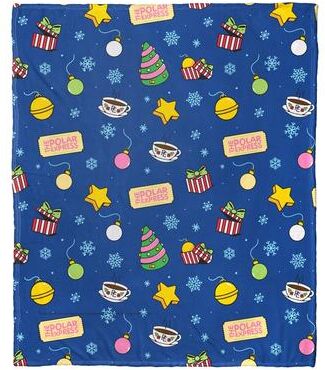
Northwest Warner Brothers Polar Express The Polar Express Silk Touch Throw Blanket"Snuggle up Holiday style with this fun The Polar Express ""Aboard the Polar Express"" Silk Touch Throw Blanket. Made from 100% polyester, this blanket features a soft and warm fabric that's perfect for keeping you cozy and comfortable."39,99 $*Shipping: 0,00 $Secure redirect to the provider
-
Friction on an inclined plane causes deceleration.
Friction on an inclined plane causes deceleration because it acts in the opposite direction of the object's motion. As the object moves up or down the incline, the friction force opposes its movement, reducing its speed. This deceleration is due to the friction force converting the object's kinetic energy into heat. The steeper the incline or the greater the coefficient of friction, the stronger the deceleration will be. **
-
What is the deceleration of the brakes 2?
The deceleration of brakes 2 is 5 m/s^2. This means that the brakes are slowing down the car at a rate of 5 meters per second squared. A higher deceleration value indicates a stronger braking force, which can help the car come to a stop more quickly. It is important for drivers to be aware of the deceleration of their brakes to ensure safe and efficient stopping. **
-
What is the formula for deceleration in physics?
The formula for deceleration in physics is given by the equation: a = (v - u) / t, where a is the deceleration, v is the final velocity, u is the initial velocity, and t is the time taken. This formula calculates the rate at which an object slows down, or decelerates, over a certain period of time. Deceleration is a negative acceleration, so the value obtained from the formula will be negative, indicating a decrease in velocity. **
-
How do you calculate the braking deceleration 2?
To calculate the braking deceleration 2, you can use the formula: a = (v_f - v_i) / t, where a is the deceleration, v_f is the final velocity, v_i is the initial velocity, and t is the time taken to decelerate. First, determine the initial and final velocities of the object. Then, measure the time it takes for the object to come to a complete stop. Finally, plug these values into the formula to calculate the braking deceleration 2. **
* All prices are inclusive of VAT and, if applicable, plus shipping costs. The offer information is based on the details provided by the respective shop and is updated through automated processes. Real-time updates do not occur, so deviations can occur in individual cases. ** Note: Parts of this content were created by AI.